Apple Watch vs. Fitbit: Which One Is Better?
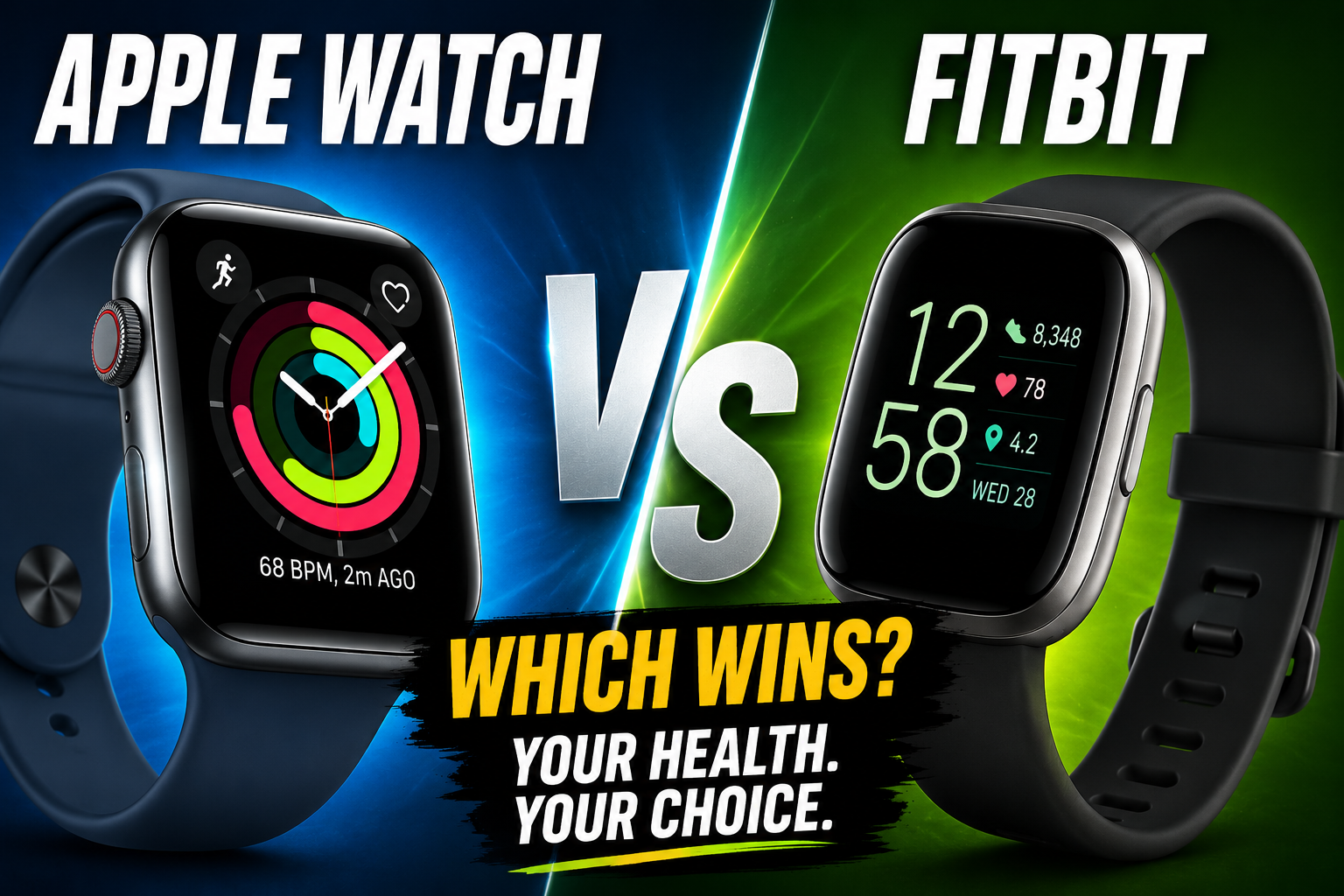
Choosing between an Apple Watch and a Fitbit is one of the most common decisions for anyone looking to improve their health, fitness, and daily wellness. Both devices can count steps, monitor heart rate, track workouts, and provide health insights, but they take very different approaches.
The Apple Watch is a full-featured smartwatch that combines advanced health monitoring with communication, productivity, and app integration. Fitbit focuses more heavily on fitness tracking, sleep analysis, recovery, and long battery life while keeping things simple and affordable.
So, which one is the better choice? The answer depends on your health goals, smartphone, budget, and the features you’ll actually use.
Quick Comparison Table
| Feature | Apple Watch | Fitbit |
|---|---|---|
| Best For | Smartwatch users | Fitness and wellness |
| Smartphone Compatibility | iPhone only | Android and iPhone |
| Battery Life | 18–36 hours | 5–10+ days |
| Sleep Tracking | Excellent | Excellent |
| Heart Rate Monitoring | Advanced | Advanced |
| ECG Support | Yes (select models) | Select models |
| Workout Tracking | Extensive | Extensive |
| GPS | Most models | Many models |
| Smart Features | Outstanding | Basic |
| Mobile Payments | Yes | Yes (select models) |
| App Ecosystem | Excellent | Limited |
| Price Range | Higher | Budget to mid-range |
At a Glance
Choose an Apple Watch if you:
- Already own an iPhone.
- Want the best smartwatch experience.
- Value communication and productivity features.
- Need advanced health monitoring.
- Use many third-party apps.
- Want emergency and safety features.
Choose a Fitbit if you:
- Primarily care about health tracking.
- Want longer battery life.
- Prefer a lightweight device.
- Want excellent sleep insights.
- Are shopping on a tighter budget.
- Use either Android or iPhone.
Design and Comfort
Apple Watch
Apple Watch features a premium design with:
- Bright OLED display
- Aluminum, stainless steel, or titanium cases
- Thousands of interchangeable bands
- Large app-focused touchscreen
- Premium materials
It feels more like a miniature smartphone on your wrist.
Fitbit
Fitbit devices emphasize comfort.
Advantages include:
- Lightweight construction
- Slim profiles
- Comfortable sleep wear
- Smaller displays
- Simpler controls
Many users forget they’re even wearing one.
Winner: Fitbit for all-day comfort; Apple Watch for premium design.
Health Monitoring
Both brands monitor:
- Heart rate
- Calories burned
- Activity
- Exercise
- Sleep
- Blood oxygen trends (supported models)
Apple Watch additionally offers:
- ECG
- Fall Detection
- Crash Detection (supported models)
- Medication reminders
- Irregular rhythm notifications
- Noise monitoring
- Walking steadiness
Fitbit focuses on long-term wellness metrics, including:
- Daily Readiness Score
- Stress Management Score
- Sleep Score
- Resting heart rate trends
- Active Zone Minutes
- Recovery insights
Winner: Apple Watch for advanced medical-style features; Fitbit for wellness-focused guidance.
Fitness Tracking
Apple Watch
Excellent for:
- Running
- Walking
- Cycling
- Strength training
- HIIT
- Swimming
- Yoga
- Hiking
- Rowing
Detailed workout metrics include:
- Pace
- Elevation
- Cadence
- Heart rate zones
- GPS routes
- Training load
Fitbit
Fitbit automatically recognizes many exercises.
Popular features include:
- Active Zone Minutes
- Exercise detection
- Daily goals
- Workout history
- Guided workouts
- Cardio fitness score
It excels at encouraging consistent activity rather than providing highly technical athletic metrics.
Winner: Apple Watch for athletes; Fitbit for everyday fitness.
Sleep Tracking
Sleep tracking is one of Fitbit’s biggest strengths.
Fitbit provides:
- Sleep Score
- Sleep stages
- Sleep duration
- Sleep consistency
- Estimated oxygen variation
- Snore detection (supported devices)
Apple Watch tracks:
- Time asleep
- REM
- Core sleep
- Deep sleep
- Respiratory rate
- Sleep schedule adherence
While Apple has improved significantly, many users still prefer Fitbit’s more detailed sleep insights.
Winner: Fitbit.
Heart Health Features
Apple Watch leads in cardiovascular monitoring.
Features include:
- ECG
- High and low heart-rate alerts
- Irregular rhythm notifications
- Cardio fitness estimates
- Walking steadiness
- Heart-rate recovery
Fitbit includes:
- Continuous heart-rate tracking
- Resting heart rate
- Heart-rate variability trends
- ECG on supported models
- Cardio fitness score
Both provide valuable information, but Apple includes more advanced health tools.
Winner: Apple Watch.
Battery Life
Battery life is one of the largest differences.
Apple Watch
Typical battery:
- 18–36 hours
- Daily charging
- Fast charging
Fitbit
Typical battery:
- 5–10 days
- Some models exceed one week
- Less frequent charging
For travelers and users who dislike charging, Fitbit has a clear advantage.
Winner: Fitbit.
Smartphone Integration
Apple Watch
Works seamlessly with:
- Messages
- Phone calls
- Siri
- Apple Pay
- Calendar
- Maps
- Home automation
- Music
- Podcasts
It essentially extends your iPhone.
Fitbit
Provides:
- Notifications
- Basic call alerts
- Calendar reminders
- Some quick replies (supported phones)
- Mobile payments on select models
Its smart features are more limited.
Winner: Apple Watch.
Safety Features
Apple Watch includes several features designed for emergencies.
These include:
- Fall Detection
- Crash Detection (supported models)
- Emergency SOS
- Emergency contacts
- International emergency calling
- Location sharing
Fitbit includes emergency features on select premium devices but generally offers fewer safety capabilities.
Winner: Apple Watch.
Battery vs. Features
One of the biggest trade-offs comes down to battery life versus functionality.
Apple Watch offers:
- More apps
- Better displays
- Rich smart features
- More health sensors
Fitbit offers:
- Less charging
- Simpler experience
- Longer continuous health tracking
- Better overnight monitoring due to extended battery life
Consider which trade-off matters more to your lifestyle.
Subscription Services
Some Fitbit features require a premium subscription.
Premium benefits may include:
- Advanced sleep analysis
- Guided workouts
- Wellness reports
- Stress management tools
- Personalized insights
Apple includes most core health features without requiring a recurring subscription.
This may influence long-term ownership costs.
Which Device Fits Your Lifestyle?
Choose Apple Watch If You:
- Own an iPhone.
- Want one device for health and productivity.
- Value smart apps and notifications.
- Exercise frequently.
- Need advanced health features.
- Want emergency safety tools.
Choose Fitbit If You:
- Prioritize sleep tracking.
- Want longer battery life.
- Prefer a lightweight wearable.
- Focus on daily wellness over smart features.
- Use Android or iPhone.
- Want a more affordable option.
Tips for Getting the Most From Either Device
Whichever wearable you choose, you’ll get better results by using it consistently.
Best practices include:
- Wear it daily for more accurate trends.
- Sleep with it to improve sleep insights.
- Keep the software updated.
- Customize activity goals based on your lifestyle.
- Review weekly health reports instead of focusing only on daily numbers.
- Enable health alerts and reminders if available.
- Clean the sensors and band regularly for accurate readings and comfort.
Common Buying Mistakes
Avoid these common mistakes before making your decision:
- Buying an Apple Watch without owning an iPhone.
- Choosing a wearable based only on appearance.
- Ignoring battery life expectations.
- Paying for premium fitness features you’ll never use.
- Forgetting to compare long-term subscription costs.
- Assuming more features always mean a better experience.
Best is Everyday Use
Both the Apple Watch and Fitbit are outstanding wearable devices, but they serve different audiences.
If you’re deeply invested in the Apple ecosystem and want the most capable smartwatch with advanced health monitoring, communication features, and emergency tools, the Apple Watch is the stronger overall choice.
If your primary goal is improving fitness, sleep, recovery, and long-term wellness with excellent battery life and a simpler experience, Fitbit remains one of the best values in wearable technology.
The best wearable isn’t the one with the longest feature list—it’s the one you’ll wear every day and use consistently to support your health goals.
Frequently Asked Questions
Is Apple Watch more accurate than Fitbit?
Both devices provide reliable health and fitness tracking for most users. Apple Watch generally offers more advanced sensors and health features, while Fitbit excels at long-term wellness tracking and sleep analysis.
Does Fitbit work with iPhones?
Yes. Fitbit is compatible with both Android and iPhone devices through the Fitbit app, although some features may vary by platform.
Can I use an Apple Watch with an Android phone?
No. Apple Watch requires an iPhone for setup and ongoing use and is not designed to work with Android smartphones.
Which is better for sleep tracking?
Fitbit is widely recognized for its detailed sleep insights, including Sleep Score, sleep stages, and recovery metrics, making it a favorite among users focused on improving sleep.
Which device has better battery life?
Fitbit offers significantly longer battery life, with many models lasting five to ten days or more, while most Apple Watch models require daily charging.
Is Fitbit better for beginners?
For users who mainly want activity tracking, sleep monitoring, and straightforward health insights, Fitbit is often easier to learn and less expensive than an Apple Watch.
Which wearable is better for athletes?
Apple Watch generally provides more advanced workout metrics, GPS features, and training tools, making it the better choice for serious athletes and fitness enthusiasts.
Can either device replace medical equipment?
No. While both wearables provide valuable health information, they are consumer devices intended for wellness and fitness tracking. They should not replace professional medical advice, diagnosis, or certified medical equipment.