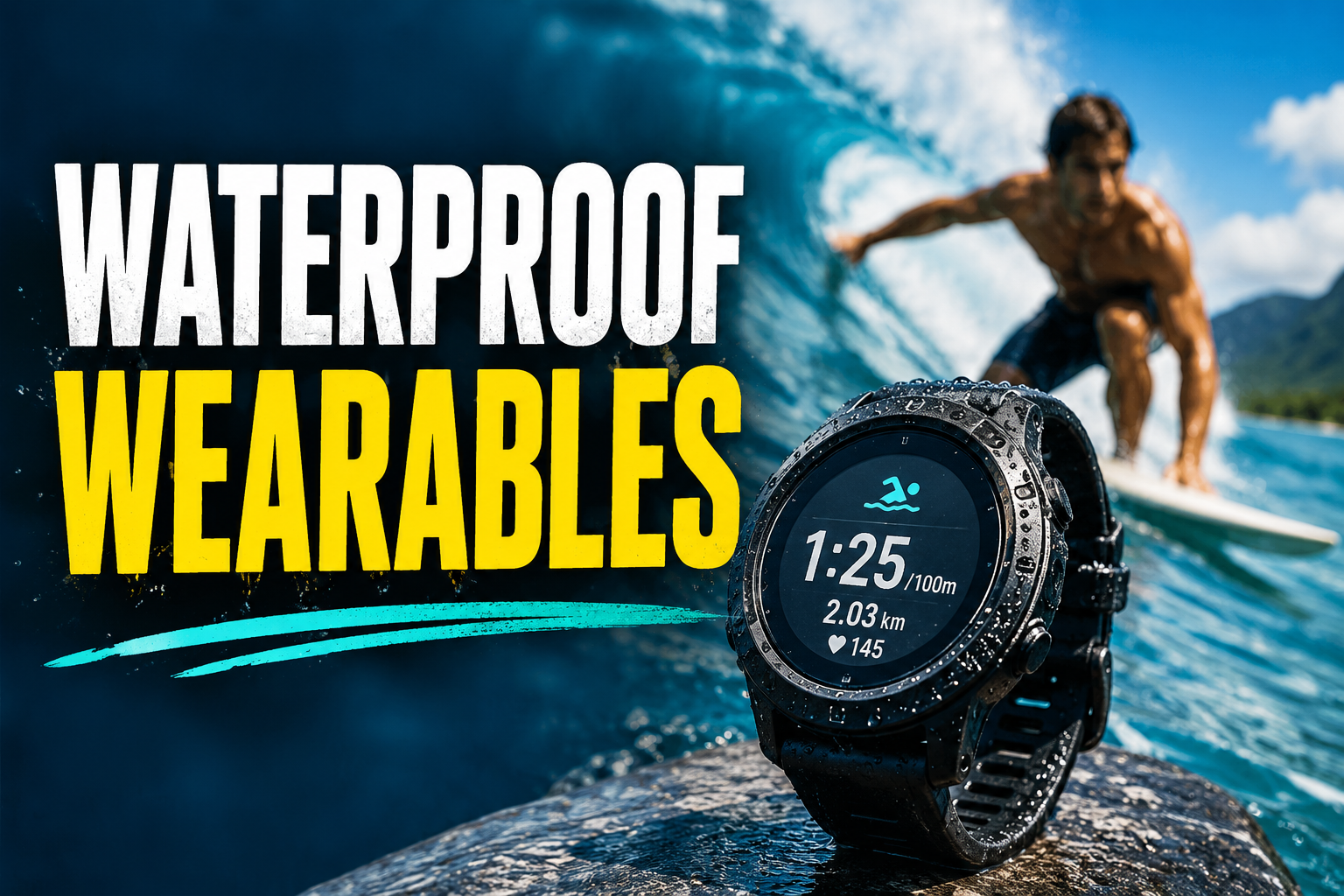
Best Waterproof Wearables
Whether you’re swimming laps, surfing ocean waves, snorkeling tropical reefs, or scuba diving deep underwater, today’s waterproof wearables can help you improve performance, stay safer, and capture unforgettable experiences. Modern devices do far more than survive water—they track heart rate, monitor dives, navigate underwater, stream music, and even communicate in emergency situations.
The challenge is choosing a wearable that matches your activity. A fitness tracker designed for pool workouts won’t necessarily survive technical scuba diving, while a professional dive computer may be excessive for casual swimmers.
This guide compares the best waterproof wearables for swimmers, surfers, snorkelers, freedivers, and scuba divers so you can invest in the right technology.
Quick Comparison Table
| Best For | Device Type | Water Rating | Key Features | Best Choice |
|---|---|---|---|---|
| Lap Swimming | Smartwatch | 5 ATM+ | Stroke tracking, SWOLF score, heart rate | Premium GPS watch |
| Open Water Swimming | GPS Smartwatch | 10 ATM | GPS, navigation, safety alerts | Multisport watch |
| Surfing | Rugged Smartwatch | 10 ATM | Tide data, GPS, weather | Surf-focused smartwatch |
| Snorkeling | Waterproof Camera | 10–15m | 4K video, stabilization | Compact action camera |
| Freediving | Dive Watch | 100m+ | Breath hold timer, depth tracking | Freediving computer |
| Recreational Scuba | Dive Computer | 40m+ | Nitrox, decompression, dive logs | Entry-level dive computer |
| Technical Diving | Advanced Dive Computer | 100m+ | Multi-gas, AI integration | Professional dive computer |
Why Waterproof Ratings Matter
Not all waterproof devices are equal.
Many smartwatches advertise water resistance but aren’t intended for deep diving.
Common Ratings
| Rating | Suitable Activities |
|---|---|
| IP68 | Rain, splashes, shallow water |
| 5 ATM | Pool swimming |
| 10 ATM | Open-water swimming, surfing |
| 100 meters | Snorkeling, water sports |
| 200 meters | Recreational scuba |
| Dive Certified (EN13319) | Professional diving |
Always verify both the manufacturer’s depth rating and intended use before taking a device underwater.
Best Waterproof Smartwatches for Swimmers
1. Premium Multisport GPS Watches
These waterproof smartwatches provide advanced swimming metrics including:
- Stroke recognition
- SWOLF efficiency score
- Lap counting
- Interval timing
- Heart rate underwater
- Open-water GPS tracking
- VO2 Max estimation
- Recovery analysis
Ideal for:
- Competitive swimmers
- Triathletes
- Open-water athletes
2. Fitness Smartwatches
Great for casual swimmers who want:
- Calories burned
- Distance
- Active minutes
- Workout summaries
- Sleep tracking
- Daily health metrics
Most models automatically detect swimming workouts.
Best Wearables for Surfers
Surfers need more than waterproofing.
Helpful features include:
- Tide charts
- Wave forecasts
- Sunrise and sunset
- GPS tracking
- Storm alerts
- Wind speed
- Session duration
- Wave count
Some surf-specific smartwatches automatically log each surfing session for later review.
Best Dive Computers
For scuba diving, a dive computer is far more important than a traditional smartwatch.
Modern dive computers monitor:
- Current depth
- Maximum depth
- Dive duration
- No-decompression limits
- Ascent rate
- Water temperature
- Surface interval
- Air integration
- Gas mixtures
- Safety stops
Many now sync directly to smartphones after each dive.
Best Wearables for Freediving
Freedivers require specialized watches that monitor:
- Maximum depth
- Dive time
- Surface recovery
- Descent rate
- Ascent rate
- Dive history
- Breath hold training
Some watches include customizable depth alarms for added safety.
Best Action Cameras
Wearable cameras let you relive underwater adventures.
Look for:
- 4K or higher recording
- Excellent image stabilization
- Waterproof without housing
- Wide-angle lens
- Voice control
- Slow-motion recording
- Long battery life
Perfect for:
- Snorkeling
- Surfing
- Paddleboarding
- Kayaking
- Scuba diving
Best Bone-Conduction Headphones
Traditional earbuds rarely stay in place underwater.
Bone-conduction headphones solve that problem.
Advantages include:
- Open-ear design
- Waterproof construction
- Built-in MP3 storage
- Comfortable fit
- Awareness of surroundings
They’re especially popular among lap swimmers.
GPS Safety Devices
For open-water athletes, GPS safety devices add peace of mind.
Features include:
- Live location sharing
- SOS alerts
- Satellite communication
- Emergency messaging
- Navigation
- Route tracking
Especially valuable for:
- Ocean swimmers
- Offshore surfers
- Paddleboarders
- Kayakers
Waterproof Fitness Rings
Smart rings are becoming increasingly capable.
Although not intended for diving, many offer:
- Sleep monitoring
- Recovery tracking
- Heart rate
- Body temperature
- Activity tracking
They’re excellent companions for swimmers interested in recovery metrics.
Smart Goggles
One of the fastest-growing categories is augmented-reality swim goggles.
These display information directly inside the lens, including:
- Lap count
- Pace
- Time
- Distance
- Stroke rate
- Heart rate
Athletes no longer need to stop and look at the pool clock.
Wearable Underwater Communication Systems
Professional divers increasingly use wearable communication devices.
Capabilities include:
- Diver-to-diver communication
- Surface communication
- Emergency alerts
- Navigation assistance
These are commonly used in:
- Commercial diving
- Scientific research
- Search and rescue
- Technical diving
Waterproof Health Monitoring
Today’s waterproof wearables monitor far more than activity.
Popular health metrics include:
- Heart rate
- Heart rate variability (HRV)
- Blood oxygen trends
- Recovery score
- Stress level
- Skin temperature
- Sleep quality
- Training readiness
These insights help athletes optimize both performance and recovery.
Battery Life Considerations
Water sports often involve extended sessions.
Look for devices offering:
- 7–20 day smartwatch battery
- 20–60 hour GPS mode
- Fast charging
- Battery saver modes
- Replaceable batteries for dive computers
Battery performance often decreases when GPS and underwater sensors run continuously.
Durability Features Worth Paying For
Premium waterproof wearables often include:
- Sapphire crystal displays
- Titanium cases
- Corrosion-resistant materials
- Stainless steel bezels
- Scratch-resistant coatings
- Reinforced buttons
- Saltwater resistance
These materials significantly extend the lifespan of devices used in harsh marine environments.
Choosing the Right Waterproof Wearable
For Pool Swimmers
Prioritize:
- Stroke tracking
- Heart rate
- Lap counting
- Battery life
For Open-Water Swimmers
Choose:
- GPS
- Emergency alerts
- Navigation
- Long battery life
For Surfers
Focus on:
- Tide forecasts
- Weather
- GPS
- Rugged construction
For Snorkelers
Consider:
- Waterproof camera
- GPS watch
- Action camera accessories
For Recreational Divers
Purchase:
- Certified dive computer
- Backup timing device
- Dive log compatibility
For Technical Divers
Invest in:
- Multi-gas dive computer
- Air integration
- Redundant systems
- Professional certifications
Maintenance Tips
Waterproof wearables last much longer with proper care.
After every saltwater session:
- Rinse thoroughly with fresh water.
- Dry with a soft microfiber cloth.
- Avoid pressing buttons while underwater unless specifically designed for it.
- Charge only after the device is completely dry.
- Inspect seals, charging ports, and straps regularly.
- Replace worn bands before they fail during water activities.
- Store devices in a cool, dry place away from direct sunlight.
Regular maintenance helps preserve waterproof seals and prevents corrosion.
Accessories That Improve the Experience
The right accessories can make your wearable more useful in and around the water.
Consider adding:
- Floating wrist straps for cameras
- Protective screen covers
- Quick-dry silicone bands
- Anti-fog treatments for smart goggles
- Waterproof carrying cases
- Portable power banks for extended trips
- Lens cleaning kits for action cameras
- Travel organizers to keep charging cables and accessories protected
Common Mistakes to Avoid
Many wearable failures happen because of user error rather than manufacturing defects.
Avoid these mistakes:
- Assuming “water resistant” means dive-ready.
- Wearing a pool-rated smartwatch for scuba diving.
- Charging devices before they’re fully dry.
- Forgetting to rinse off saltwater after use.
- Ignoring manufacturer depth limits.
- Using cracked or damaged devices underwater.
- Neglecting firmware updates that improve performance and reliability.
Explore with Waterproof Wearables
Waterproof wearables have evolved into powerful tools that enhance safety, performance, and enjoyment across nearly every aquatic activity. Whether you’re training for your next swim meet, chasing waves, exploring coral reefs, or logging deep dives, choosing the right wearable can provide valuable insights and peace of mind.
Focus on your primary activity, pay close attention to water-resistance certifications, and invest in durable devices built for the environments you’ll encounter. The best waterproof wearable isn’t necessarily the most expensive—it’s the one designed for the way you spend time in the water.
Frequently Asked Questions
Are all waterproof smartwatches safe for scuba diving?
No. Many smartwatches are suitable for swimming but are not certified for scuba diving. Always check the manufacturer’s recommended depth rating and intended use before diving.
What does 5 ATM mean?
A 5 ATM rating means the device is designed to withstand pressure equivalent to about 50 meters of static water. It’s generally suitable for swimming but not deep scuba diving.
What’s the difference between water-resistant and waterproof?
“Water-resistant” means a device can withstand some exposure to water under specific conditions, while “waterproof” is often used as a marketing term. Always rely on the official IP, ATM, or dive certification rather than the wording alone.
Can GPS work underwater?
GPS signals do not travel effectively through water. Most GPS watches record your position when your wrist breaks the surface during swimming or use satellite signals before and after your activity.
Are bone-conduction headphones better for swimmers?
Yes. Waterproof bone-conduction headphones stay securely in place, leave your ears open, and often include onboard MP3 storage for listening to music underwater without needing a phone.
How often should I rinse waterproof wearables after saltwater use?
Every time. Rinsing with fresh water after exposure to saltwater helps prevent corrosion, extends the life of seals, and keeps buttons and charging contacts functioning properly.
Do dive computers need regular maintenance?
Yes. Manufacturers typically recommend periodic inspections, battery replacement (for user-replaceable models), firmware updates, and seal checks to ensure reliable operation and safety underwater.
Can smart rings be used while swimming?
Many smart rings are water resistant enough for swimming and showering, but they are generally not designed for scuba diving or prolonged exposure to deep water. Always verify the specific rating for your device.
Affiliate Disclosure: As an Amazon Associate, We earn from qualifying purchases. If you buy through links on this page, We may earn a small commission at no additional cost to you. Thank you for your support.