
Heads up: some links on this page are affiliate links. As an Amazon Associate, we earn from qualifying purchases, at no extra cost to you. Read our full disclosure.
A fitness tracker with no screen sounds like a step backward. Then you wear one for a week and notice you stopped checking your wrist 80 times a day. That’s the pitch, and for the right person, it really works.
What a screen-free tracker actually is
It’s a soft band, usually fabric, with sensors on the bottom and nothing on top. It tracks heart rate, sleep, heart rate variability, activity and recovery around the clock and sends everything to an app. You check your data on your phone when you choose to, not every time your wrist buzzes.
The main options
| Tracker | Monthly fee | Claimed battery | Best for |
|---|---|---|---|
| Whoop | Required membership | Several days to about 2 weeks depending on model | Serious recovery and strain tracking |
| Garmin Cirqa smart band | None | Up to about 10 days | Garmin data without a subscription |
| Polar Loop | None | Several days | Polar fans and casual training |
| Amazfit Helio Strap | None | Up to about 10 days | Budget recovery tracking |
Whoop
Whoop made this category popular, and its strain and recovery scores are still the gold standard for athletes. You don’t really buy a Whoop. You buy a membership and the band comes with it. If you’ll use it every day, it can be worth it. If you’re curious and casual, it’s an expensive experiment.
Garmin Cirqa
Garmin’s answer to Whoop, with no subscription. It feeds Body Battery, sleep, stress, HRV status and training readiness into the Garmin Connect app, can auto-detect workouts, and lasts up to about 10 days. For most people asking “Whoop or something cheaper,” this is the one I’d point them to.
Polar Loop and Amazfit Helio Strap
Two more no-fee options from fitness brands with solid apps. They’re good fits if you already use Polar or Amazfit gear.
Are screen-free trackers better?
For sleep and recovery, often yes. They’re comfortable to sleep in, they don’t light up at night, and you’ll wear them more consistently, which makes the data better. For workouts, it’s a mixed bag. You can’t see your heart rate mid-run without your phone, and none of these have built-in GPS.
They’re also not great as a first tracker for someone who loves seeing numbers. If you like glancing at steps or the time, get a band with a screen. Our fitness tracker buyer guide covers those.
Who should get one
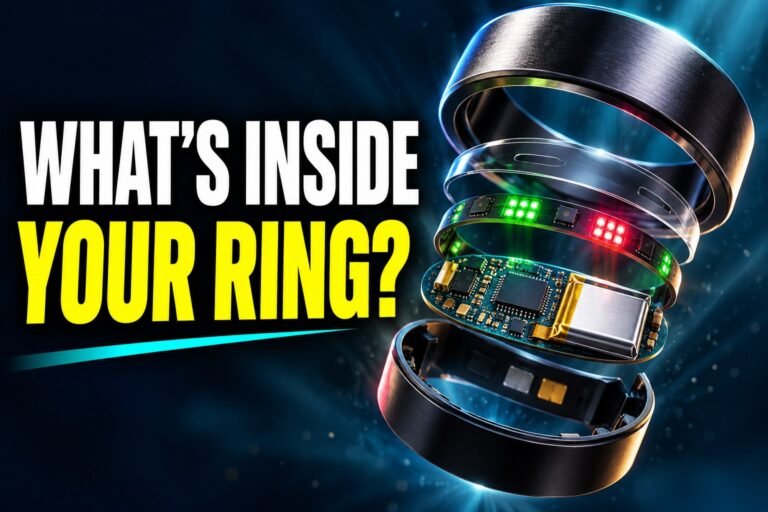
People who want better sleep and recovery data without distraction. Athletes who already wear a GPS watch for workouts and want 24/7 data the rest of the time. And honestly, anyone who’s tired of their wrist bossing them around. If you’d rather wear it on your finger, a smart ring does the same job.
FAQ
What is a screenless fitness tracker?
A band with health sensors but no display. You see your data in a phone app instead of on your wrist.
Is Whoop worth it?
It can be for athletes who use the recovery and strain data daily. For casual users, a no-subscription option like the Garmin Cirqa is better value.
What’s the best Whoop alternative without a subscription?
The Garmin Cirqa is the strongest no-fee alternative, with Polar Loop and Amazfit Helio Strap as other options.
Do screenless trackers have GPS?
No. They use your phone’s GPS for outdoor workouts.
Screenless tracker or smart ring?
They track similar things. A ring is less noticeable, while a band is easier to wear during workouts and can usually be moved to your upper arm.