Heads up: some links on this page are affiliate links. As an Amazon Associate, we earn from qualifying purchases, at no extra cost to you. Read our full disclosure.
Pretty accurate at rest, a bit shaky during hard workouts. That’s the honest one-line answer. A modern smartwatch usually lands within a few beats per minute of a chest strap when you’re sitting, walking or sleeping. Things get messier when you’re lifting weights, doing sprints, or wearing the watch loose.
How your watch reads your heart rate
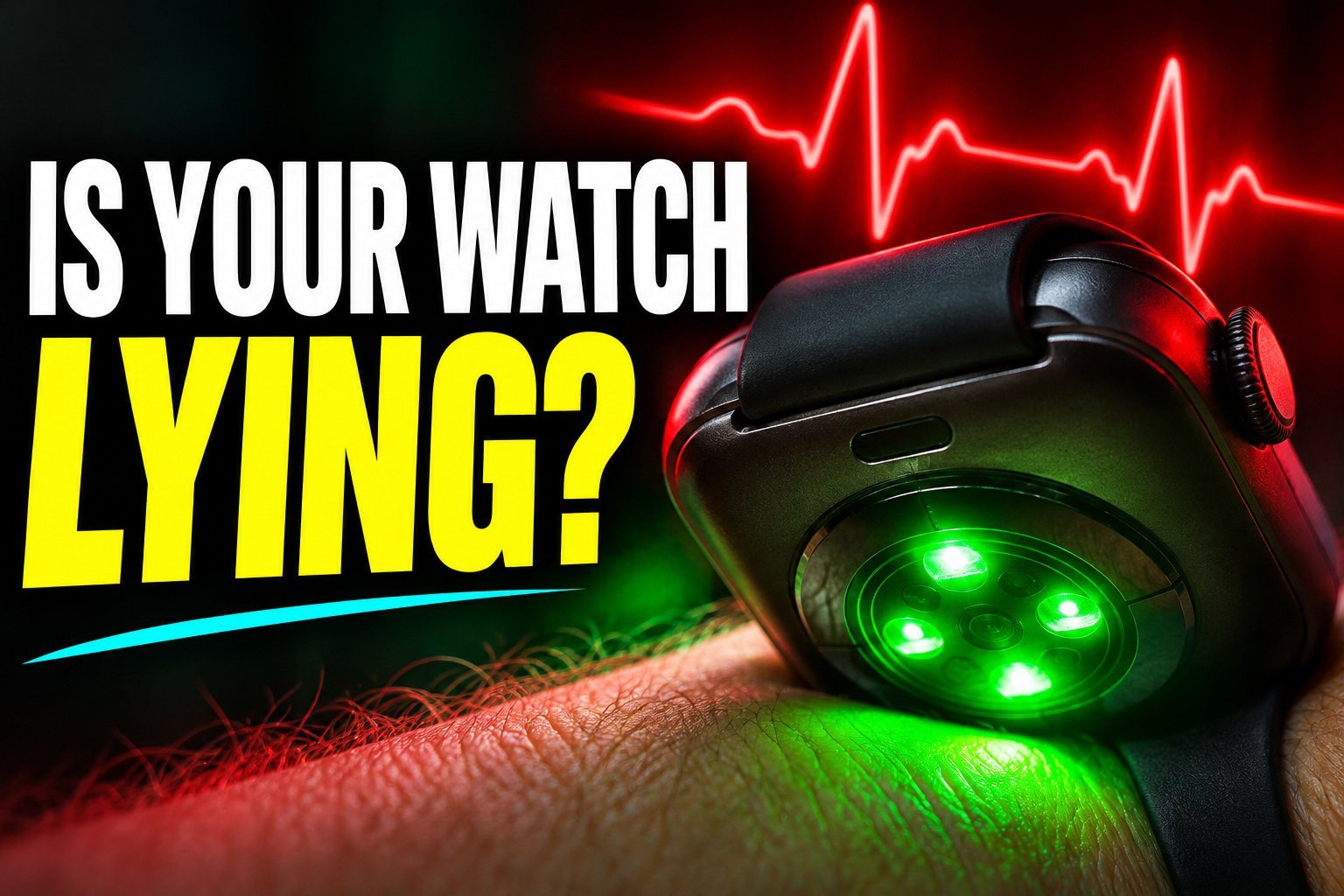
Flip your watch over and you’ll see little green lights. That’s an optical sensor, and the method is called photoplethysmography (PPG, thankfully). The lights shine into your skin, and a sensor measures how much light bounces back. Each heartbeat pushes a little more blood through your wrist, which absorbs more light, so the reading pulses with your heart. The watch’s software turns that wobble into a number.
A chest strap works differently. It reads the electrical signal from your heart directly, the same basic idea as a hospital ECG. That’s why straps are still the gold standard for workouts.
When smartwatch heart rate is accurate
Resting heart rate, sleeping heart rate, steady walks and easy jogs are where wrist sensors shine. The signal is clean, your arm isn’t flailing, and the watch has time to lock on. For tracking trends over weeks, like your resting heart rate dropping as you get fitter, a watch is plenty accurate.
When it gets less accurate
Fast changes trip it up. During interval training, your heart rate jumps faster than the sensor can follow, so it lags behind by a few seconds. Weightlifting is worse, because gripping a bar flexes your wrist muscles and squeezes the blood flow under the sensor. Boxing, rowing and anything with lots of wrist movement can cause odd spikes.
Fit matters a lot too. A loose watch lets light leak in and bounce around. Wear it snug, about a finger’s width above your wrist bone, and tighten it a notch for workouts.
Cold weather can reduce blood flow to your wrist and weaken the signal. Tattoos on the wrist, especially dark solid ink, can block the light. And some research has found optical sensors can perform differently across skin tones, though newer sensors with multiple light colors have narrowed that gap.
What about ECG and AFib alerts?
Many watches from Apple, Samsung, Google, Fitbit and Withings can take an ECG reading when you hold a finger on the crown or bezel. That uses electrical sensors, not light, and in many countries those features are cleared by health regulators to detect signs of atrial fibrillation. Irregular rhythm notifications in the background use the optical sensor. They’re useful early warnings. They aren’t a diagnosis, so talk to a doctor if you get one.
How to get better readings
Wear it snug and higher on the wrist during workouts. Keep the sensor clean. For serious training, pair a chest strap heart rate monitor with your watch, which most Garmin, Apple, Samsung and Polar watches support. And judge your watch by trends rather than any single number.
If heart tracking is a big reason you’re shopping, our fitness tracker buyer’s guide and Apple Watch vs. Fitbit comparison will help you choose.
FAQ
Are smartwatch heart rate monitors accurate?
At rest and during steady exercise, they’re usually close to a chest strap. They’re less accurate during intervals, weightlifting and when worn loose.
Which is more accurate, a smartwatch or a chest strap?
A chest strap, especially for workouts with quick changes in effort. It reads your heart’s electrical signal directly.
Why does my smartwatch heart rate spike randomly?
Usually a loose fit, wrist movement, cold skin or a dirty sensor. Tighten the band and see if it settles.
Can a smartwatch detect heart problems?
Some can flag irregular rhythms that may suggest atrial fibrillation, and some take an ECG. They can’t diagnose anything, so see a doctor about any alert.
Do tattoos affect smartwatch heart rate?
Dark, solid wrist tattoos can block the sensor’s light and cause bad readings. Wearing the watch on the other wrist often fixes it.