Heads up: some links on this page are affiliate links. As an Amazon Associate, we earn from qualifying purchases, at no extra cost to you. Read our full disclosure.
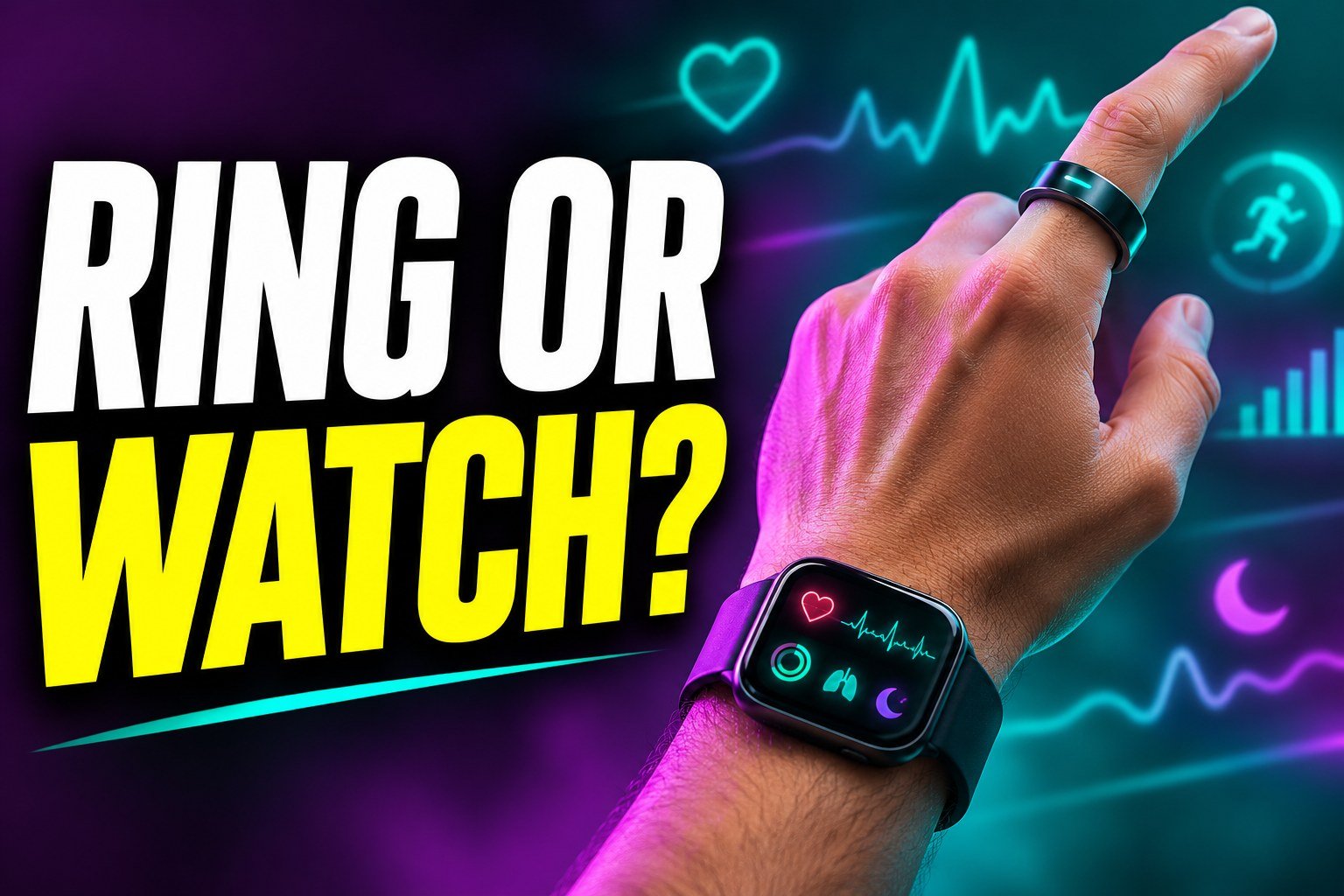
A smart ring and a smartwatch can both track your sleep, heart rate and activity. They’re built for different people, though, and choosing the wrong one usually means it ends up in a drawer. The real question is whether you want a screen.
| Smart ring | Smartwatch | |
|---|---|---|
| Screen | None | Yes |
| Sleep comfort | Excellent | Good to okay |
| Battery | About 4 days to 2 weeks | About 1 day to weeks, depending on model |
| Notifications | None (some vibrate for alerts) | Yes |
| Workouts | Basic, no GPS | Strong, often with GPS |
| Looks | Like jewelry | Like a watch |
| Subscription | Some brands require one | Usually not |
Choose a smart ring if
Sleep and recovery are what you care about most. You don’t like wearing a watch to bed. You want something discreet that looks like jewelry, or you already wear a nice traditional watch and don’t want to give it up. Rings like the Oura Ring and RingConn Gen 3 shine here. Start with our smart ring buyer’s guide.
Choose a smartwatch if
You want notifications, calls, payments and apps on your wrist. You run or ride and want accurate GPS and live stats mid-workout. Or safety features like fall detection matter for you or a parent. The Apple Watch for iPhone owners and the Samsung Galaxy Watch for Android are the usual picks.
What about both?
Plenty of people wear a smartwatch during the day and a ring at night, or a regular watch on the wrist with a ring for tracking. If your apps support it, the data can live together, like a Galaxy Ring and Galaxy Watch in Samsung Health. Just don’t expect two devices from different brands to agree perfectly on every number.
Accuracy
For overnight heart rate and sleep, rings are often as good as watches or better, thanks to the snug fit and the strong signal in your finger. For workouts, watches win, especially for outdoor runs with GPS. More on that in how smart rings work.
Cost over time
Watches usually cost more up front. Some rings, especially Oura, need a monthly membership, which adds up. Check our list of smart rings with no subscription if that’s a dealbreaker.
My take
If you want one device to do everything, get a smartwatch. If you want the best sleep data with the least hassle, get a ring. And if you’re still not sure, ask yourself whether you’d miss seeing the time on your wrist. That usually settles it.
FAQ
Is a smart ring better than a smartwatch?
For sleep tracking and comfort, often yes. For notifications, apps and workouts, a smartwatch is better.
Can a smart ring replace a smartwatch?
Only if you don’t need a screen, notifications or GPS workouts.
Can I wear a smart ring and a smartwatch together?
Yes. Many people wear a watch by day and a ring at night, or both at once.
Do smart rings track workouts?
Yes, basic ones, but they don’t have GPS and are less accurate for intense workouts.
Which has better battery life?
Smart rings usually last longer than Apple, Samsung and Google watches. Some Garmin and Amazfit watches last even longer.