Heads up: some links on this page are affiliate links. As an Amazon Associate, we earn from qualifying purchases, at no extra cost to you. Read our full disclosure.
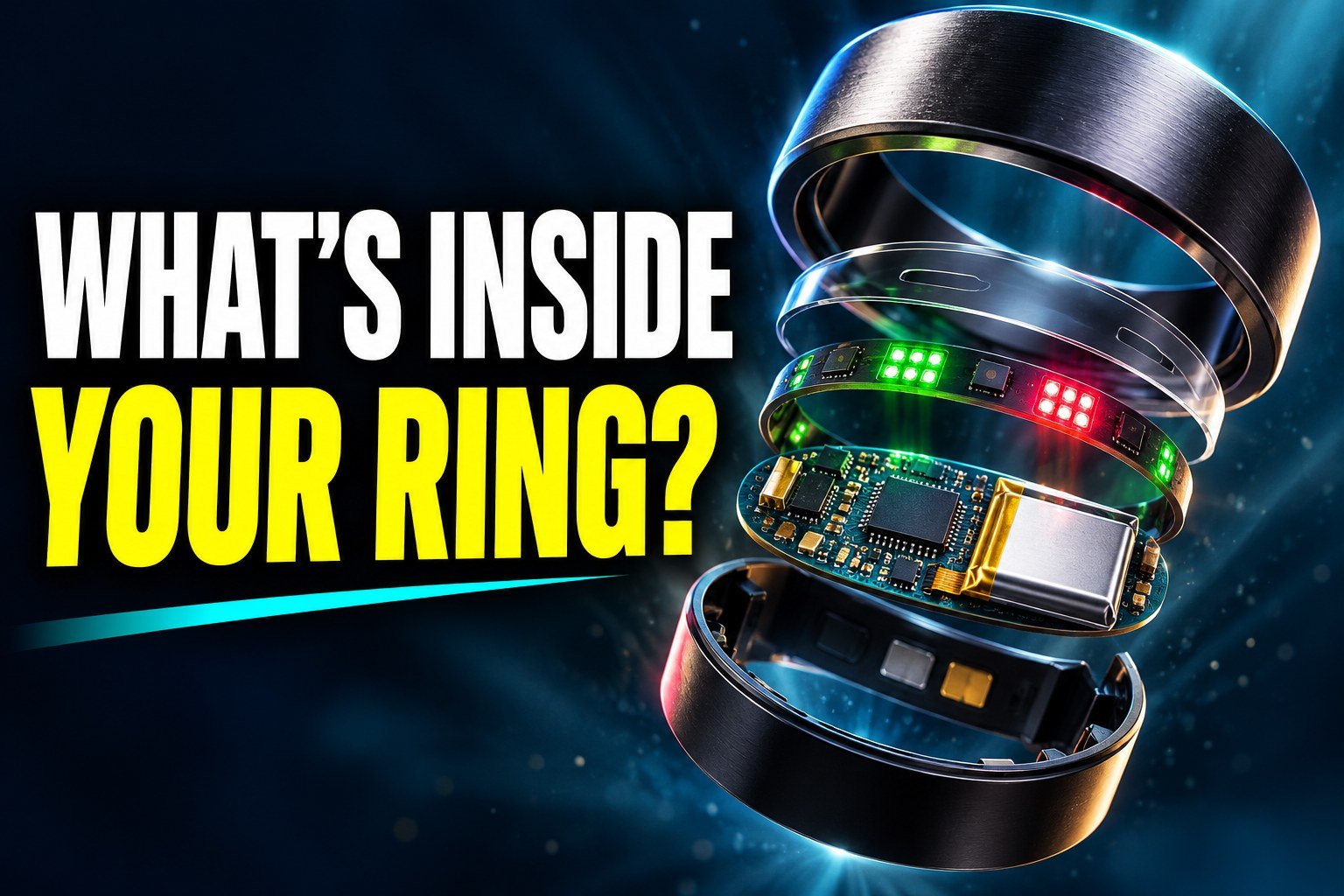
A smart ring looks like a plain band, so it’s fair to wonder how it knows you slept badly. There’s no magic. It’s a few tiny sensors pressed against the skin on your finger, a battery, a Bluetooth chip, and an app doing a lot of math.
The sensors inside
Optical heart rate sensor
Little green, red and infrared LEDs shine into your finger, and a sensor measures how much light bounces back. Blood absorbs light, so each heartbeat makes the reading wiggle. That’s how the ring counts your heart rate and measures heart rate variability (HRV), which is the tiny variation between beats. Higher HRV usually means you’re well recovered.
The finger is actually a great spot for this. The arteries are close to the surface and the ring sits snugly, so overnight readings are often steadier than a watch’s.
Blood oxygen
The same light sensors, using red and infrared light, estimate blood oxygen (SpO2) while you sleep. Treat it as a trend, not a medical reading.
Temperature sensor
It tracks small changes in your skin temperature from night to night. It doesn’t tell you your exact body temperature. It’s useful for spotting when you’re getting sick, and many rings use it for cycle tracking.
Accelerometer
This motion sensor counts steps, detects when you’re active, and helps figure out when you fell asleep and woke up.
How rings turn that into sleep stages
The ring combines your movement, heart rate, HRV, breathing rate and temperature, then estimates whether you were in light, deep or REM sleep. Sleep labs use brain sensors to do this properly, so no ring is perfect. But good rings get close enough to show real patterns, like how late dinners or a few drinks wreck your deep sleep. That pattern spotting is where they earn their keep.
What smart rings can’t track well
Workouts with lots of hand movement, like weightlifting or tennis, can confuse the sensors. Rings also don’t have GPS, so they borrow your phone’s location for runs and walks. And there’s no screen, so you won’t get notifications or a quick heart rate glance. If you want those, look at our fitness tracker buyer’s guide instead.
Battery and charging
Because there’s no screen, rings sip power. Most last about a week, and some claim up to two. You charge them on a small dock or a charging case.
Are they worth it?
If sleep and recovery are what you care about, yes. A ring is easier to sleep in than a watch, and that means better data. Our smart ring buyer’s guide has the picks, including ones with no subscription.
FAQ
How does a smart ring measure sleep?
It combines movement, heart rate, heart rate variability, breathing rate and skin temperature to estimate light, deep and REM sleep.
Is a smart ring more accurate than a smartwatch?
For overnight heart rate and sleep, often yes, because the finger gives a strong signal and the ring fits snugly. For workouts, watches with GPS usually win.
Do smart rings have GPS?
No. They use your phone’s GPS when you track an outdoor workout.
Which finger should you wear a smart ring on?
Most brands recommend the index finger for the best fit and readings, but the middle or ring finger works too. Use the brand’s sizing kit to check.
Can a smart ring detect illness?
It can spot changes, like a rise in skin temperature or resting heart rate, that sometimes show up before you feel sick. It can’t diagnose anything, so see a doctor if you’re worried.